Emergency · Updated November 24, 2026
Burst Pipe in South Carolina: What to Do in the First 30 Minutes
A split supply line does not wait for a plumber. The first thirty minutes are about stopping the supply, protecting the people in the house and documenting what the water has already reached.
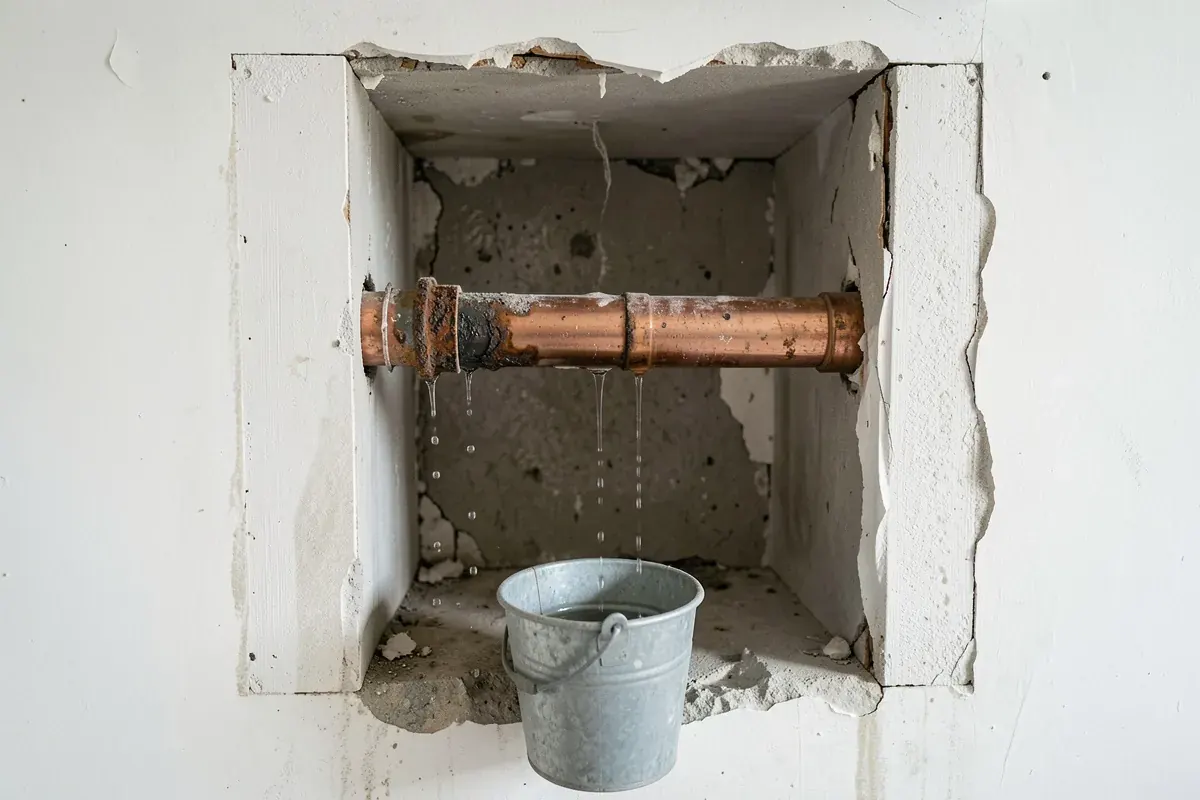
The first 30 minutes, in order
1. Get people away from the wet area
Keep children and pets out of standing water, and do not walk through it if outlets, cords or the electrical panel are nearby. If water is dripping near a ceiling light or fixture, turn that circuit off from a dry location if you can reach the panel safely. If the panel itself is wet or you would have to stand in water to reach it, leave it alone and call an electrician.
2. Shut off the main supply
Close the fixture valve first if the break is under a sink or behind a toilet. If you cannot find it, close the main. In many South Carolina homes the main is at the street curb, in a utility closet or where the supply enters the house. Turning it clockwise until it stops is usually enough. If the valve is old and will not move, do not force it to the point of breaking; call the water utility or a plumber.
3. Drain the residual water
Open the lowest faucet in the house, and open a tap on an upper floor if you have one. That gives the water left in the pipes somewhere to go instead of into the wall. Flush a toilet once if it is safe to do so.
4. Kill power to wet circuits
Only do this if the panel is dry and reachable without stepping in water. Shut off the circuits serving the affected rooms. Do not touch switches, outlets or appliances that are wet or sitting in water.
5. Document before you clean
Take a slow video walkthrough. Photograph the source, the water line on walls, damaged furniture, and the path the water took. Put a ruler or a coin next to the water line for scale. This record is what an adjuster works from, and it takes less time than most homeowners expect.
6. Call for extraction and drying
Call (833) 781-1831. A dispatcher takes the address, the source and the affected rooms, then routes the details to an independent local contractor. The visible water is the easy part. The wall cavity, insulation and subfloor are what stay wet.
Why a burst pipe is different from a slow leak
A slow leak gives you time to notice a stain, move a cabinet and call someone. A burst pipe releases a large volume under pressure, often inside a wall or above a ceiling. Water follows framing, drops through light fixtures and pools in a room that has no obvious connection to the break.
By the time the ceiling stains, the ceiling cavity may already be saturated. By the time the floor feels soft, the subfloor and joists may have been wet for hours. That is why the response is not just "dry the floor." It is find the path, open what needs opening, and dry the assemblies that absorbed water.
What to move and what to leave alone
Move electronics, documents, photographs and anything irreplaceable out of the wet zone first. Lift furniture legs onto blocks or foil if the water is shallow. Roll up rugs only if they are not soaked through; a soaked rug is heavy and can tear.
Leave the carpet, padding and drywall in place until they have been photographed. A contractor may need to see the water line and the extent of the spread. Do not run a household fan into a cavity, do not use a shop vac near standing water and power, and do not paint over a damp stain.
What the restoration crew will do
The first job is to confirm the source and stop it. Crews isolate the affected run, extract standing water, and use moisture meters and thermal imaging to find water that has traveled away from the break. Saturated insulation is removed because it holds water against framing. Affected cavities are opened so air can reach them.
Air movers and dehumidifiers run until readings meet the dry standard. Daily logs record the readings, the equipment and the affected materials. Once the structure is dry, repairs follow: patching, paint, trim and flooring. Documentation is prepared throughout so you have a clear record for an insurance claim.
Insurance: the details that matter
Most South Carolina homeowner policies cover sudden and accidental releases, including a burst supply line. The argument usually starts over cause and maintenance. A pipe that failed because it was never protected from a freeze, or because a fitting had been corroding for years, may be treated differently than a pipe that split without warning.
Keep the damaged parts until they have been photographed. Keep receipts for anything you buy to protect the property, including fans, towels, storage bins or a hotel stay if the home is uninhabitable. Report the loss promptly and ask the contractor to document the cause, the affected materials and the moisture readings.
Preventing the next one
Insulate supply lines that run through unheated spaces, seal gaps where cold air reaches the pipe, and keep the thermostat at a minimum overnight rather than switching heat off. Open cabinet doors on exterior walls during a freeze so warm room air reaches the plumbing. Disconnect hoses, shut off and drain outdoor spigots, and have someone check a vacant property every few days.
In South Carolina, the freeze risk is not limited to midwinter. A short cold snap is enough, especially in the Upstate and in homes with crawlspaces or unheated garages.
Water is still moving?
Call (833) 781-1831 and describe the address, the source and what is wet. A dispatcher answers 24 hours a day and routes the details to an independent local contractor.
Common questions
Emergency questions
Short answers to the questions homeowners and property managers ask most often.
Should I call a plumber or a restoration company first?
Call the restoration line first if water is still spreading or has soaked carpet, drywall or a ceiling. The dispatcher can route extraction and drying, and you can arrange a plumber for the pipe itself. If the leak is active and you cannot shut it off, call the water utility or an emergency plumber immediately.
Can I stay in the house while it dries?
Often yes, if the affected area is limited and the water was clean. Expect noise from air movers and dehumidifiers running around the clock. If the loss involves sewage, extensive demolition or a whole-floor drying setup, staying elsewhere is usually the better call.
How long does it take to dry a wall cavity?
It depends on the material, the cavity size and how long it was wet. A small opening with air movement can dry in a few days. Saturated insulation, exterior walls and multiple assemblies take longer. Readings decide when drying ends, not the calendar.
Will the insurance company pay for a burst pipe?
Sudden and accidental releases are commonly covered. Long-term seepage, poor maintenance and freezing damage may be excluded or limited. Read your policy and ask the contractor to document the cause and the drying process so the adjuster has the evidence.
What should I do with wet carpet and padding?
Photograph it first. Saturated padding usually cannot be saved and is removed. Carpet may be salvageable if it is clean water and can be dried quickly, but contaminated water changes the decision. Do not put wet carpet back before the subfloor is verified dry.
South Carolina · 24 hours a day
Get the water out before it spreads further.
One call reaches independent South Carolina contractors who can extract, dry and document the loss. Tell us where the water is and what it has reached.
Call (833) 781-1831