Crawlspace · Updated November 24, 2026
Crawlspace Water Damage in South Carolina: Why It Stays Wet
A crawlspace can be wet for months without a puddle you can see. In South Carolina humidity, the moisture often arrives as damp air that condenses on cool joists and never gets a chance to leave.
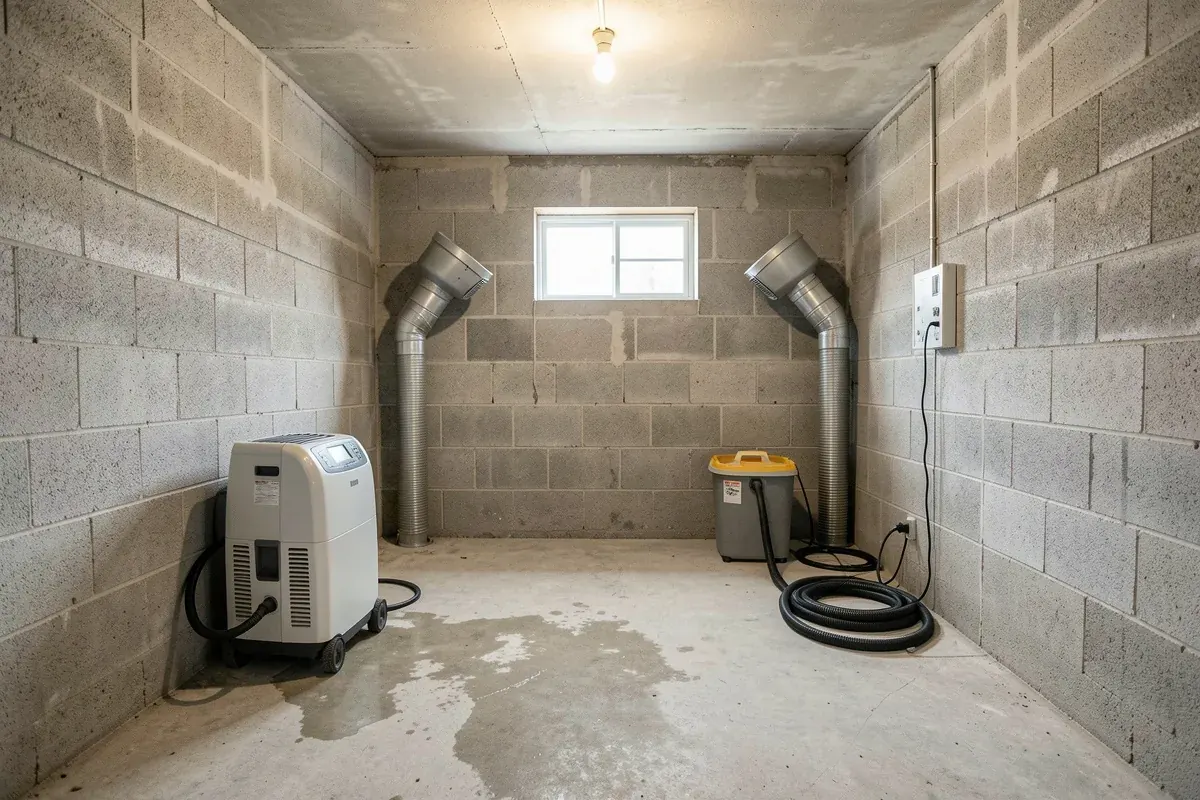
Why South Carolina crawlspaces stay wet
Most of the state sits in a warm, humid climate for much of the year. A crawlspace is cooler than the living space above it, and cool surfaces collect condensation when damp air moves through. The ground under the house can stay damp long after the rain stops, and a vapor barrier that is torn, incomplete or missing lets that moisture rise into the framing.
Water also arrives from the outside. Gutters that discharge next to the foundation, soil that slopes toward the house, a driveway that sheds water toward the garage, and downspouts that empty into a flower bed all send water to the lowest point. In coastal communities, storm surge and high tides can push water into crawlspaces through vents and around pier footings.
Plumbing adds another path. A slow supply-line leak, a condensate line from the air handler, or a washing machine hose that drips behind the house can keep the ground wet without ever producing a puddle in the kitchen.
Signs the crawlspace is wet
- A musty odor that gets stronger in summer or after rain
- Floors that feel soft, springy or uneven
- Condensation on ducts, pipes or joists
- Cupped hardwood or lifting tile above the crawlspace
- Rust on fasteners, hangers or plumbing
- Pests that are attracted to damp wood
- High humidity readings under the house
Homeowners often notice the smell before they notice anything else. A musty crawlspace smell is not a cleaning problem. It usually means the space is staying above the humidity level where mold and wood-decay fungi can grow.
Why a fan is not a dry-out
Air movement helps, but a fan does not remove water from the air. In a humid climate, blowing warm outside air into a cool crawlspace can make condensation worse. The goal is to remove the water source, keep the ground covered, and use dehumidification and measured drying to bring the framing and subfloor down to a dry standard.
That means the work starts at the ground. Standing water is extracted, saturated debris is removed, and the vapor barrier is repaired or replaced. Only then can air movers and a dehumidifier do their job.
What a proper crawlspace dry-out involves
- Source control. Find the plumbing leak, the grade problem, the blocked drain or the storm entry point and correct it.
- Standing water removal. Extract or pump water out before installing equipment.
- Debris and insulation removal. Wet cardboard, wood scraps and saturated insulation hold moisture and should come out.
- Moisture mapping. Readings on joists, subfloor, sill plates and piers show how far the moisture has spread.
- Vapor barrier repair. A continuous barrier over the ground stops soil moisture from rising into the framing.
- Drying and dehumidification. Air movers and a dehumidifier run until readings meet the dry standard.
- Verification. Final readings and photographs are recorded before the access door is closed.
Mold and wood rot
Mold can begin on damp framing in as little as 24 to 48 hours, though visible growth often takes longer in a crawlspace because light and air movement are limited. Wood rot is slower, but it is more serious. A joist that stays damp for months loses strength, and the repair can involve structural work rather than a simple cleaning.
If growth is already present, the job is remediation rather than drying alone. That means containment, removal of colonized material, air scrubbing and treatment of the remaining structure, followed by drying and verification.
Prevention that actually works
Start outside. Clean the gutters, extend downspouts well away from the foundation, and correct soil that slopes toward the house. Keep mulch below the siding and the sill plate. Inside, repair plumbing leaks promptly, keep the condensate drain clear, and make sure the vapor barrier is continuous and not torn.
In humid parts of the state, a crawlspace dehumidifier can be a better investment than extra vents. Venting brings in humid air, which is the opposite of what a damp crawlspace needs. Have the space inspected after a major storm, a plumbing leak or a long wet season, even if the living area looks fine.
Water is still moving?
Call (833) 781-1831 and describe the address, the source and what is wet. A dispatcher answers 24 hours a day and routes the details to an independent local contractor.
Common questions
Crawlspace questions
Short answers to the questions homeowners and property managers ask most often.
How do I know if my crawlspace has water damage?
Look for a musty smell, soft or uneven floors, condensation on ducts and pipes, rusted fasteners and high humidity under the house. A moisture meter and a visual inspection from the access door are a good start. If the smell persists after rain, assume moisture is staying in the space.
Can I just put a fan in the crawlspace?
A fan alone will not dry a damp crawlspace in South Carolina humidity. It moves air but does not remove moisture. Source control, a vapor barrier and dehumidification are what actually lower the moisture content of the framing and subfloor.
Is a wet crawlspace an emergency?
Standing water, a burst pipe or water rising after a storm is an emergency. Slow condensation and damp ground are urgent but not the same as a flood. Either way, the longer the framing stays wet, the higher the risk of mold and wood rot.
How long does crawlspace drying take?
It depends on how wet the framing is, how much ventilation the space has and how humid the weather is. A small leak with a working vapor barrier may dry in a few days. A long-running leak or a flooded crawlspace can take longer, and readings decide when it is done.
Will a vapor barrier fix the problem by itself?
Only if the water source is corrected. A vapor barrier stops soil moisture from rising, but it does not stop a plumbing leak, a downspout emptying at the foundation or storm water entering through a vent. Fix the source first, then repair the barrier.
South Carolina · 24 hours a day
Get the water out before it spreads further.
One call reaches independent South Carolina contractors who can extract, dry and document the loss. Tell us where the water is and what it has reached.
Call (833) 781-1831