Commercial · Updated November 24, 2026
Commercial Water Damage: A South Carolina Business Owner's Checklist
A commercial water loss is measured in downtime as much as square footage. The response has to protect people, stock and records while keeping as much of the building usable as possible.
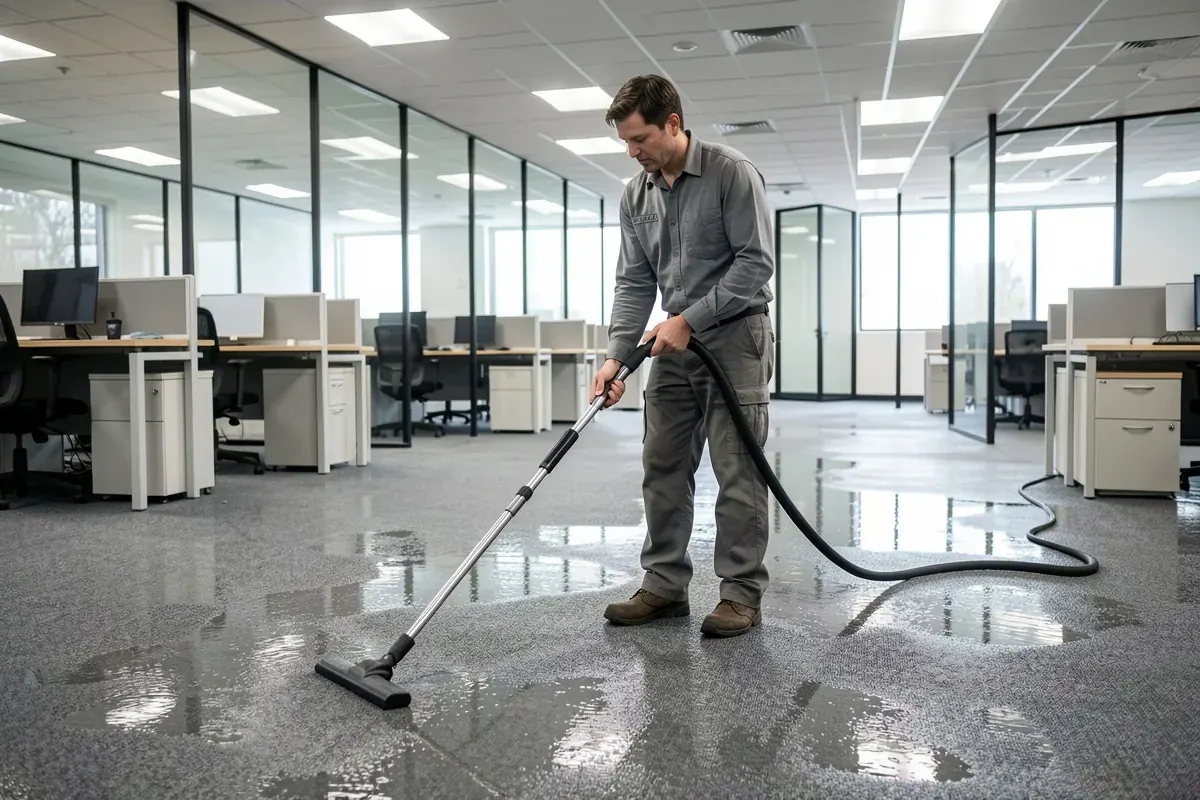
The first hour: a business owner's checklist
- Get people out of the affected area. Keep staff and customers away from standing water, wet electrical equipment and suspended ceilings.
- Stop the source. Shut off the supply, isolate the unit or close the valve. If you cannot find it, call the building manager or the water utility.
- Protect the power. Shut off circuits serving the wet area only if the panel is dry and safe to reach. Do not energize anything that has been wet.
- Call the restoration line. Describe the property type, the source, the affected areas and which parts of the building must stay open. Call (833) 781-1831.
- Document before cleanup. Photograph the source, the water line, damaged stock and equipment. Note the time and the rooms affected.
- Start a downtime log. Record when the business stopped operating, which areas closed and what it will take to reopen. That log matters for the claim and for your own planning.
Protect the business, not just the building
Water and humidity damage more than drywall. Cardboard, paper records, upholstery, electronics, packaged stock and raw materials all absorb moisture quickly. Mold can appear on porous goods within two days. The building can be dried and reopened while a stock loss quietly becomes the larger claim.
Move what can be moved to a dry area, raise stock off wet floors, and photograph everything in place before it is removed. Do not power on electronics that have been wet. Do not assume a sealed box kept the contents dry. If the water was category 2 or 3, porous items that may have been contaminated are usually treated as unsalvageable.
Keep part of the building open
Containment is what makes a partial shutdown possible. Plastic sheeting and negative air pressure keep dust and humidity out of clean areas. In a restaurant, that may mean closing the kitchen while the dining room stays usable. In an office, it may mean isolating one suite or one floor while the rest of the building keeps working.
The containment plan should be drawn before equipment is placed. It needs a clear access path, a way to monitor the drying chamber, and a plan for shutting down HVAC systems that could spread moisture through the building.
How the drying sequence is planned
Commercial drying is sequenced around business impact. The spaces that generate revenue or serve customers are usually first, followed by support areas and storage. That does not mean skipping the source or the wettest assembly; it means planning the order so the building can reopen in stages.
Moisture mapping identifies wet assemblies behind finishes, above ceilings and under floors. Equipment is placed where it will actually dry those assemblies, not just where it is convenient. Readings are logged daily, and the log becomes the evidence that the building was dry before reconstruction.
Before you reopen
- The source is repaired and verified, not just shut off.
- Final moisture readings meet the dry standard in the affected assemblies.
- Electrical, gas, fire-suppression and HVAC systems have been inspected by the appropriate trade.
- Food, healthcare and childcare areas meet the health and safety requirements for reopening.
- Stock, records and equipment have been sorted into saved, discarded and replaced.
- Photos, readings, material lists and the downtime log are in one claim file.
Insurance and the paper trail
Commercial claims move faster when the evidence is organized. Keep the source documentation, the moisture logs, the affected-material list, photographs and receipts together. Separate the building loss from the stock loss and from the business interruption. If your policy includes business interruption coverage, the downtime log is the record that shows what actually stopped and for how long.
Do not throw away damaged stock or equipment before it has been photographed and listed. If an adjuster needs to inspect it, a clear photo with a date and a scale reference is far better than a description written from memory.
Prevention and readiness
Most commercial losses trace back to a handful of causes: failed flexible connectors, corroded shut-off valves, blocked condensate lines, roof penetrations and sprinkler or suppression discharges. A short quarterly inspection covers most of them.
Know where the isolation valves are for each unit. Keep a shutoff map in the building. Check under sinks and behind appliances, exercise valves, keep condensate drains clear and confirm that vacant suites have heat in cold weather. A leak detector in a mechanical room is a small addition compared with the cost of a weekend leak discovered on Monday.
Water is still moving?
Call (833) 781-1831 and describe the address, the source and what is wet. A dispatcher answers 24 hours a day and routes the details to an independent local contractor.
Common questions
Commercial questions
Short answers to the questions homeowners and property managers ask most often.
Can restoration work happen outside business hours?
Yes. Calls are answered 24/7 and work can be scheduled overnight or before opening so the building is usable when staff arrive. Tell the dispatcher your operating hours and access restrictions when you call.
How do I keep part of my business open during drying?
Containment and negative air pressure are the usual tools. The contractor isolates the affected area, keeps a separate access path and monitors the drying chamber so dust and humidity do not spread into the areas that remain open.
What should I do with wet inventory?
Photograph it in place, list it, and move it out of the wet area if it is safe to do so. Porous stock exposed to category 2 or 3 water is usually unsalvageable. Do not power on wet electronics or assume sealed packaging kept the contents dry.
How long does commercial drying take?
It depends on the size of the loss, the materials affected and how long the water sat. A small office leak may dry in a few days. A flooded retail floor or a loss involving ceilings and HVAC systems takes longer. Readings, not appearance, decide when drying ends.
Does business interruption insurance cover this?
Some commercial policies include business interruption or extra expense coverage. Whether it applies depends on your policy and the cause of the loss. Keep a downtime log and talk to your agent or adjuster about what is covered.
South Carolina · 24 hours a day
Get the water out before it spreads further.
One call reaches independent South Carolina contractors who can extract, dry and document the loss. Tell us where the water is and what it has reached.
Call (833) 781-1831